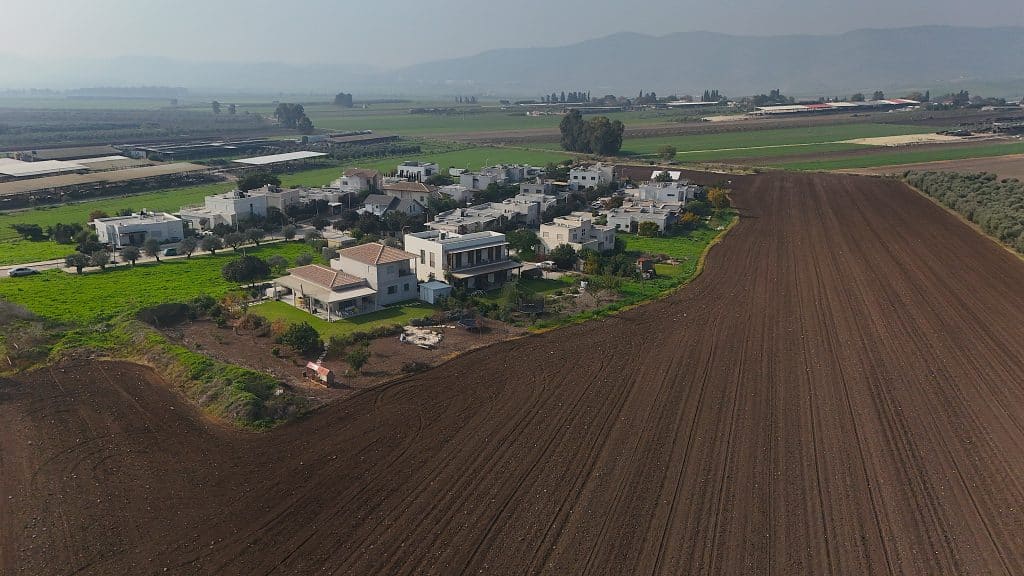
4. The big house and the extra space (Timrat's strategy)
In Tameret, you will find properties on particularly large lots (sometimes over a dunam). The advantage here is the "surplus building rights" - the potential to add a large housing unit (over 130 square meters) that will serve as an additional home for an heir or as a legal income unit. The spacious gardens and proximity to the natural forest give these properties a high real estate premium.
לנכסים שאני מציג כרגע בעמק יזרעאל — לחצו כאן
Chapter 2: The Professional Dream Team – The Role of the Architect and Engineer
Massive construction or renovation in the valley requires a professional team that understands the language of the local committees:
-
The architect (application editor): He is the first player to enter the picture after the purchase. His job is to translate your dreams into building plans, check the building rights according to the city plan, and manage the online licensing process in the "Available Licensing" system. He is responsible for the visibility, functionality, and adaptation of the structure to the spatial guidelines of the locality.
-
The building engineer (constructor): comes into the picture as soon as there is an initial architectural sketch. He is solely responsible for the structure's skeleton, stability, and engineering safety. The engineer prepares the "static calculations" and monitors the execution on site, including concrete strength tests and approval of the skeleton before closing.
Chapter 3: The interface with the planning authorities – the path to Form 4
Every project in the valley goes through the "Jezreelim" regional committee and the council's engineering department.
The main licensing steps:
-
Permit information file: Producing basic information about the plot – what is permitted to be built and what are the restrictions.
-
Submitting the permit application: a digital process that includes firefighting, air force, and Home Front Command permits.
-
Settlement approval: Unlike the city, in the valley, the consent of the moshav or kibbutz committee is required for architectural plans.
-
Form 4 (Occupation Approval): The final step that confirms that the house is safe for habitation and complies with the permit. It includes inspections by the "Yuveli HaEmek" company and approval from the council engineer.
Chapter 4: Procedure for Building a 2026 Military Base – Security on the Fast Track
Due to the needs of the hour, significant relief has been approved for the construction of a fire station in existing homes without protection:
-
14-day route: Approval can be obtained from the Home Front Command in just two weeks for single-family homes.
-
Exemption from building permits: In many homes, a building permit can be built through a reporting process only, without the need for a full submission to the local committee.
-
Dimensions and standards: The required area is 9 square meters net (not including walls). In exceptional cases, 5 square meters net can be approved.
-
Tax exemption: This procedure is exempt from the improvement levy (for the minimum area) and exempt from permit fees to the Israel Land Authority.
Chapter 5: Updated Real Estate Taxation for 2026 – Payment Distribution and Ways to Save
Proper tax planning is key to a successful financial transaction. Here's what you need to know about the payments and who pays them:
1. Who pays what? (Common division in the valley)
| Tax type |
Who usually pays? |
Professional comments |
| Purchase tax |
The buyer |
Paid within 60 days of signing the contract to the Tax Authority. |
| Appreciation tax |
The seller |
Paid on the profit created between the historical purchase price and the selling price. |
| Improvement levy |
The seller |
Applies to the increase in the value of the land. The seller is legally obligated to pay it, but it can be stipulated in the contract that the buyer will pay against a reduction in price (net transaction). |
| Fees and charges |
The buyer/builder |
Construction fees and development charges (sewer, water, paving) are paid to the council when a permit is issued. |
2. Purchase tax 2026 (updated rates for a single apartment)
The steps were frozen, which increases the real tax burden:
-
Up to 1,978,745 NIS: Full exemption (0%).
-
1,978,745 to 2,347,040 NIS: 3.5%.
-
2,347,040 to 6,055,070 NIS: 5%.
-
6,055,070 to 20,183,565 NIS: 8%.
-
Over 20,183,565 NIS: 10%.
3. How do you reduce taxes? Legal ways to save
In the complex market of moshavim and kibbutzim, there are several strategies for reducing the tax burden:
-
Deduction of expenses in capital gains tax: The seller can deduct from the profit expenses such as brokerage fees (up to 2%), attorney fees, renovation and construction costs of a commercial property, construction fees, and even real mortgage interest.
-
Exemption of up to 140 square meters from the improvement levy: When expanding a residential apartment or rebuilding, it is possible to receive a full exemption from the improvement levy on an area of up to 140 square meters, provided that the owner or his relative will live in the property for 4 years after the completion of construction.
-
Refund of 1/6 of the purchase tax on a plot of land: Buying a plot of land to build a single-family home? If you issue a building permit within 24 months, you are entitled to a refund of one-sixth of the purchase tax you paid (reduction from 6% to 5%).
-
Splitting an agreement (movable property): When selling luxury homes that include expensive contents (outdoor kitchen, smart systems), a separate agreement can be drawn up for the movable property. This way, taxation is calculated only on the net real estate component.
-
Property Tax on Vacant Land (New in 2026): Please note that starting January 2026, it is proposed to impose an annual property tax of 1.5% on vacant land. Early identification of needs can help you avoid purchasing a plot of land that will become a tax burden if you do not build on it quickly.
Why Lior Zahavi and Emek Real Estate?
The path to a home in the valley passes through a deep understanding of the area. With intimate familiarity with the community affiliation processes in kibbutzim and moshavim and rural settlements, rich experience in supporting with admission committees and full control over the planning and division procedures, an understanding of the various processes and the local urban plan, I give you the peace of mind and professional security required to carry out the most accurate real estate transaction for you. I am here to ensure that your vision for a home in the valley becomes a stable and secure reality.
I don't just find you a house; I build you a housing strategy . From the first meeting at LIORNADLAN.CO.IL where we need the budget, to the moment you open the door on your way to Form 4 – I'm there to make sure you're making the right move for your family.
Summary and final recommendations
The market in the Jezreel Valley in 2026 continues to be strong and stable thanks to accelerated infrastructure development and robust demand. To succeed, act wisely:
-
Preliminary check: Verify the affiliation status and rights in the kibbutz/moshav.
-
Financial planning: Take into account the updated VAT (18%) and the new property tax on vacant land.
-
Professional guidance: Don't compromise on professionals who know the language of the valley.
I invite you to a personal consultation meeting without any obligation in which we will turn your dream into a practical work plan.
Lior Zahavi – Emek Real Estate
052-6481725
לנכסים שאני מציג כרגע בעמק יזרעאל — לחצו כאן
#
Disclaimer: The information presented in this article is for general information only and does not constitute legal advice, real estate appraisals or tax advice. Planning, construction and taxation laws change frequently and are subject to decisions by the Israel Land Authority, the Tax Authority and local committees. Before carrying out any transaction or planning procedure, it is mandatory to consult with qualified professionals (lawyer, accountant, architect and appraiser) who will examine the specific circumstances of the case. The author and the "Emek Real Estate" office are not responsible for any damage caused as a result of reliance on the above.